Best Peptides for Healing & Injury Recovery
A comprehensive guide to the best peptides for healing injuries, accelerating recovery, and supporting tissue repair. Covers tendon, ligament, muscle, gut, and wound healing peptides with evidence ratings and dosing protocols.
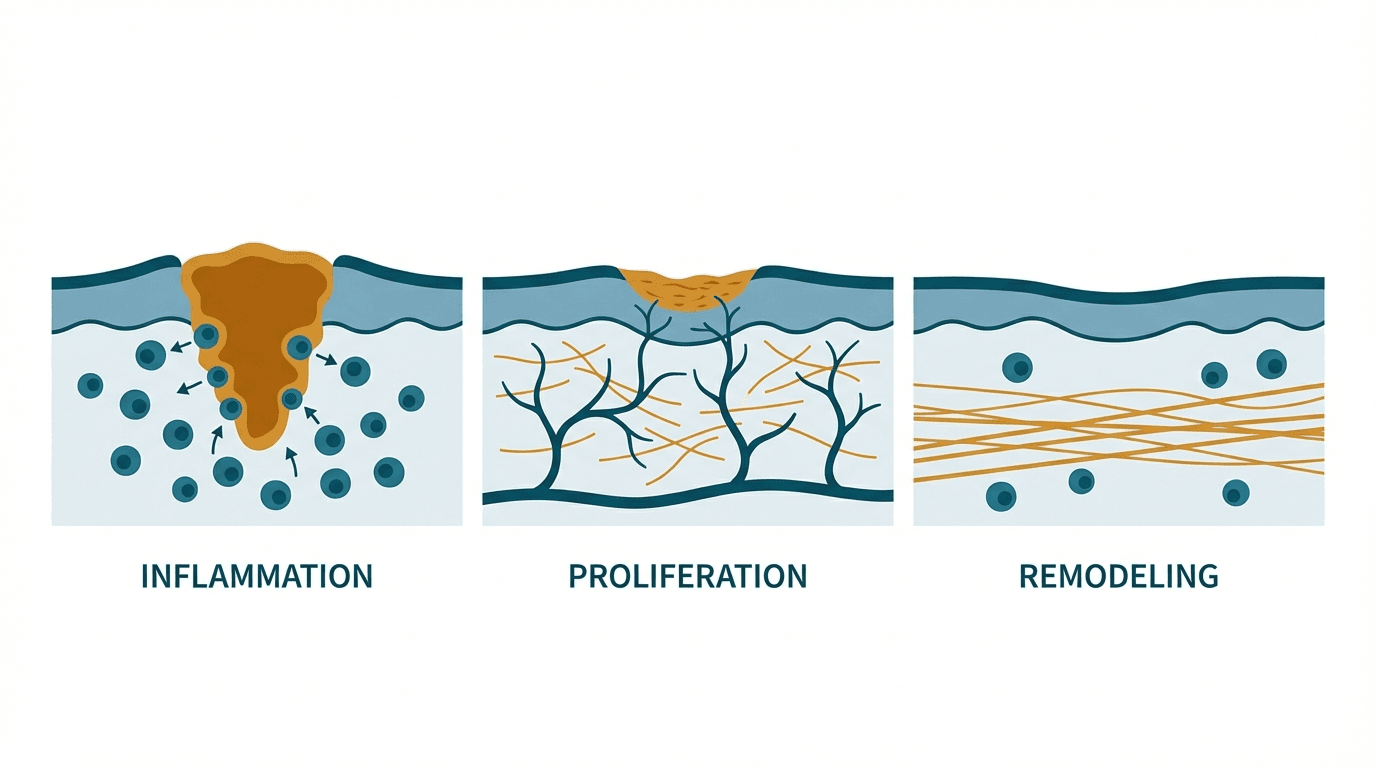
Overview
Peptides have emerged as one of the most promising tools for accelerating the body's natural healing processes. Unlike traditional anti-inflammatory drugs that merely mask pain, healing peptides actively promote tissue repair at the cellular level — stimulating angiogenesis (new blood vessel growth), upregulating growth factors, reducing inflammation, and enhancing cell migration to injury sites. The three most researched peptides for healing are BPC-157, TB-500, and GHK-Cu, each with distinct mechanisms that make them suitable for different types of injuries.
Best Peptides for Healing & Recovery
Mechanism: Angiogenesis + growth hormone receptor upregulation in tendon fibroblasts
Key benefit: Best for localized tendon, ligament, gut, and muscle healing
Mechanism: Actin upregulation + systemic cell migration to injury sites
Key benefit: Best for systemic healing, hard-to-reach injuries, and cardiac repair
Mechanism: Collagen synthesis stimulation + gene expression modulation via copper delivery
Key benefit: Best for wound healing, scar reduction, and skin/tissue regeneration
Quick Comparison
References
Frequently Asked Questions
What are the best peptides for healing injuries?
How long do healing peptides take to work?
Are healing peptides safe?
Can peptides replace surgery for injuries?
What is the best peptide stack for healing?
Explore next
- BPC-157 dosage guideComprehensive BPC-157 dosage guide covering subcutaneous, intramuscular, and oral administration protocols. Includes reconstitution instructions, cycle guidance, stacking considerations, and references to published preclinical research on this gastric pentadecapeptide.
- TB-500 dosage guideEducational reference covering TB-500 (Thymosin Beta-4) dosage protocols, including loading and maintenance phases, reconstitution, and administration details as discussed in research literature.
- GHK-Cu dosage guideEducational reference for GHK-Cu (copper peptide) dosage protocols including subcutaneous injection, topical application, and microneedling as discussed in published research.