Tools
Peptide Reconstitution Calculator
Calculate reconstitution volumes, syringe draw amounts, and dosing for any peptide. Educational use only — always follow your prescriber's instructions.
Quick presets
Draw to this mark
10
units(0.10 mL)
Concentration
2,500
mcg/mL
Volume per dose
0.10
mL
Doses per vial
20
doses
Days supply
20
@ 1x/day
Show the math›
5 mg ÷ 2 mL = 2.50 mg/mL = 2,500 mcg/mL
250 mcg ÷ 2,500 mcg/mL = 0.100 mL
0.100 mL × 100 units/1 mL = 10 units
How to Reconstitute Peptides
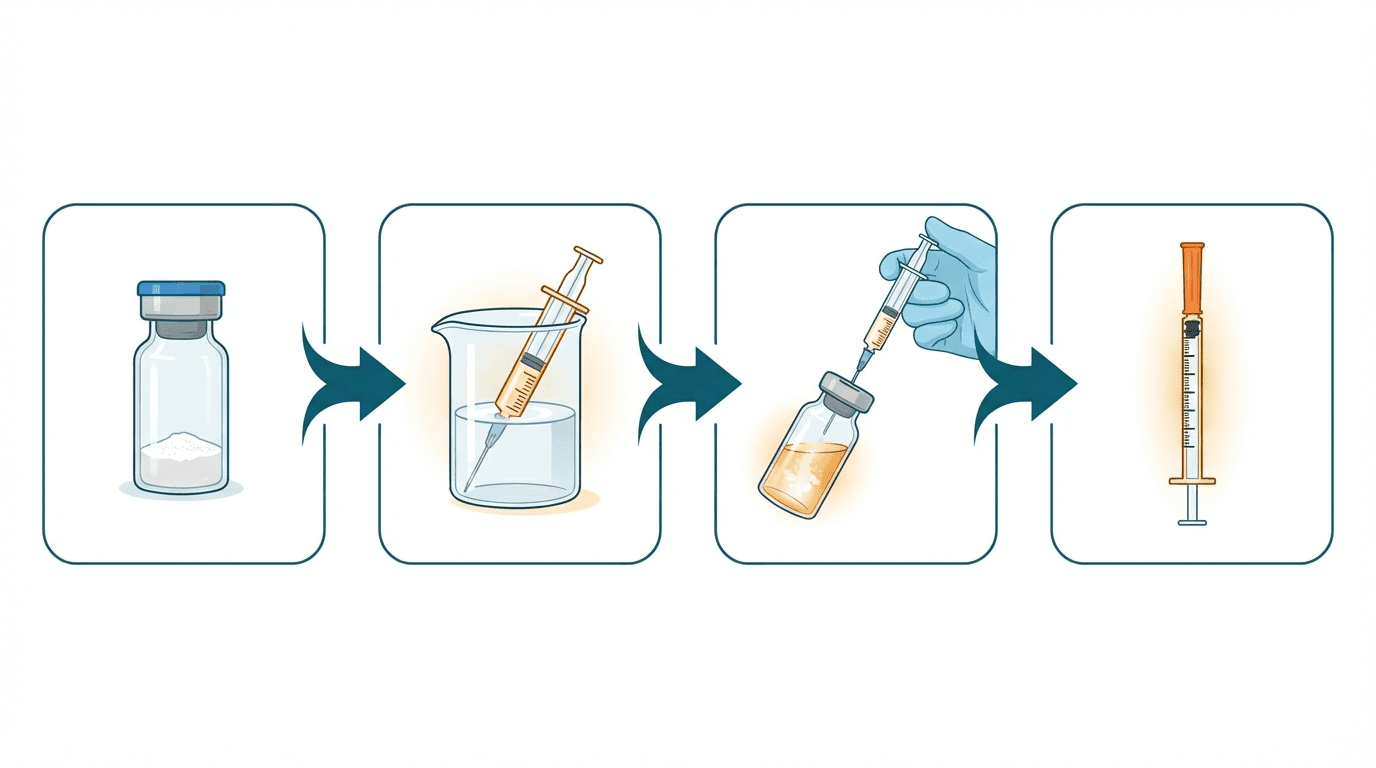
Peptide reconstitution is the process of dissolving a lyophilized (freeze-dried) peptide powder into a liquid solution for administration. Proper technique ensures accurate dosing and maintains peptide stability.
- Gather materials: peptide vial, bacteriostatic water (BAC water), alcohol swabs, and an insulin syringe (U-100).
- Clean the vial stopper of both the peptide vial and BAC water bottle with an alcohol swab. Allow to air dry.
- Draw bacteriostatic water into your syringe — the amount determined by your desired concentration (use the calculator above).
- Inject water into the peptide vial. Insert the needle through the stopper at a slight angle. Slowly dispense the water against the glass wall of the vial — never spray directly onto the lyophilized powder.
- Gently swirl the vial until the powder is fully dissolved. Do not shake — shaking can denature the peptide and reduce potency.
- Refrigerate at 2–8°C (standard refrigerator temperature). Reconstituted peptides mixed with BAC water are typically stable for up to 28 days.
Understanding Syringe Units
Insulin syringes measure volume in “units” rather than milliliters, which causes confusion for many peptide users. Here is the conversion:
| Syringe Size | Total Units | mL per Unit |
|---|---|---|
| 1 mL | 100 units | 0.01 mL |
| 0.5 mL | 50 units | 0.01 mL |
| 0.3 mL | 30 units | 0.01 mL |
Regardless of syringe size, 1 unit always equals 0.01 mL. The only difference is total capacity: a 0.3 mL syringe has finer graduation marks, making it easier to measure very small volumes precisely.
Explore next
- Dosage CalculatorFind evidence-based dosing ranges for any peptide. Adjust for body weight, experience level, and administration route.
- Cost CalculatorEstimate peptide costs per dose, per week, per month, and per year. Enter your vial price and dosing schedule to plan your budget.
- Injection Volume CalculatorConvert any peptide dose to exact mL and syringe units. Enter your desired dose and concentration to see exactly how much to draw on a U-100 insulin syringe.
- Vial Usage PlannerPlan your peptide supply. Calculate doses per vial, days of supply, and monthly vial consumption based on your dosing schedule and optional wastage.
Frequently Asked Questions
How much bacteriostatic water should I use?
Can I use sterile water instead of bacteriostatic water?
How long does reconstituted peptide last?
What if I added too much or too little water?
How do I read an insulin syringe?
What's the difference between mcg and mg?
Can I mix two peptides in the same syringe?
Educational Use Only
This calculator is provided for educational and informational purposes. It is not medical advice. Always follow your healthcare provider's dosing instructions. The Peptide Effect does not sell, prescribe, or endorse any specific peptide product.
Last reviewed: February 2026