Best Peptides for Anti-Aging & Longevity (2026 Guide)
A comprehensive guide to the best peptides for anti-aging, longevity, and healthspan extension. Covers telomere maintenance, mitochondrial protection, NAD+ restoration, and tissue-regenerating peptides with evidence ratings.
Overview
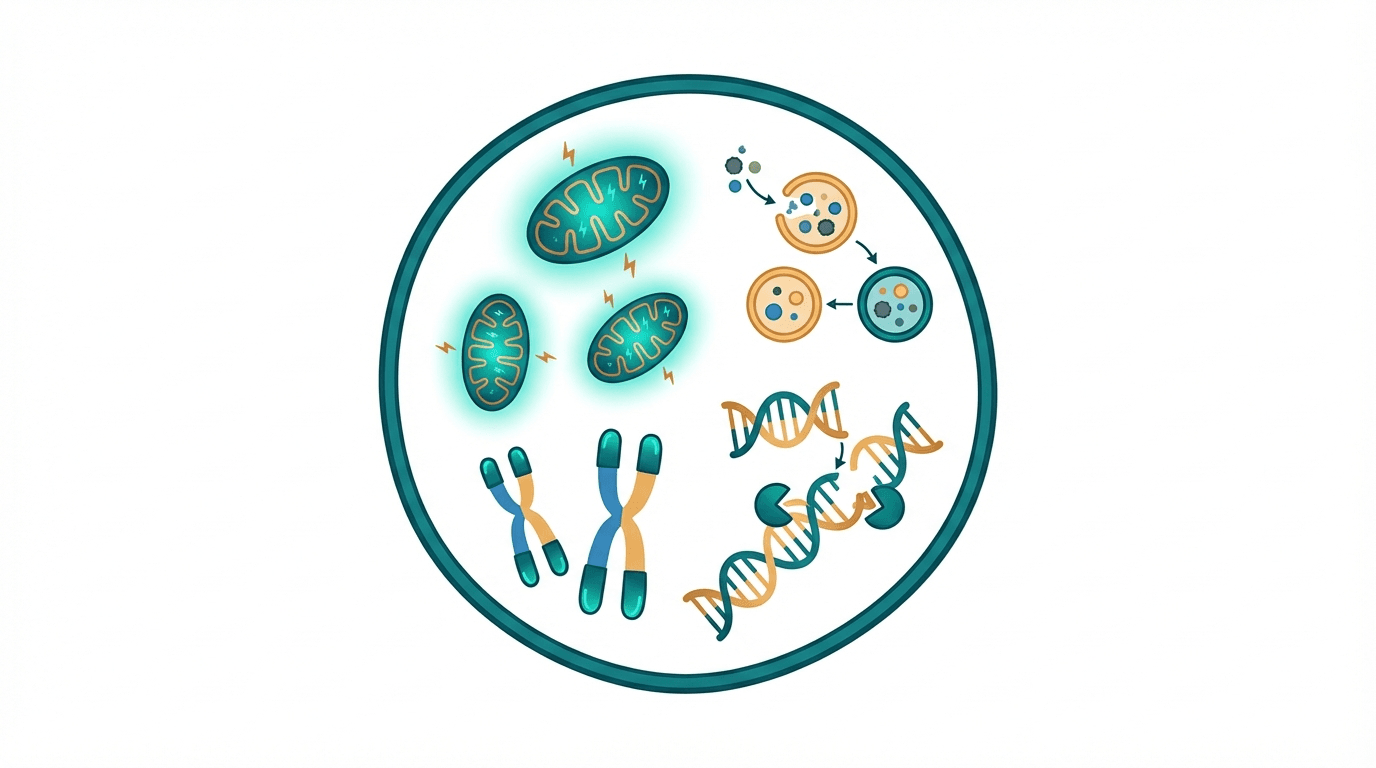
Anti-aging peptides target the fundamental biological mechanisms of aging rather than just treating its symptoms. The most promising approaches include telomere maintenance (Epithalon activates telomerase to protect chromosomal integrity), mitochondrial optimization (SS-31, MOTS-c, and Humanin protect the cellular powerhouses that decline with age), NAD+ restoration (replenishing the coenzyme that declines ~50% between ages 40 and 60), and extracellular matrix remodeling (GHK-Cu reverses gene expression patterns toward a younger profile). Unlike cosmetic interventions, these peptides aim to slow or partially reverse aging at the cellular and molecular level.
Best Peptides for Anti-Aging & Longevity
Mechanism: Synthetic tetrapeptide based on epithalamin that activates telomerase in human somatic cells, extending telomere length and delaying replicative senescence
Key benefit: Only peptide with direct evidence of telomere elongation in humans; associated with 27% reduction in mortality in long-term observational studies
Mechanism: Copper-binding tripeptide that resets expression of over 4,000 genes toward a younger pattern, stimulates collagen/elastin synthesis, and recruits stem cells to damaged tissue
Key benefit: Broadest anti-aging gene expression profile of any peptide; measurable improvements in skin thickness, elasticity, and firmness within 8–12 weeks
Mechanism: Essential coenzyme for sirtuin activation, PARP-mediated DNA repair, and mitochondrial electron transport chain function — all of which decline precipitously with age
Key benefit: Restores cellular energy metabolism and DNA repair capacity; IV or subcutaneous delivery bypasses the bioavailability limitations of oral precursors like NMN/NR
Mechanism: Mitochondria-derived peptide (MDP) that activates STAT3 signaling and inhibits BAX-mediated apoptosis, protecting cells from oxidative stress-induced death
Key benefit: Circulating levels inversely correlate with age and Alzheimer's risk; protects neurons, cardiomyocytes, and pancreatic beta cells from age-related damage
Mechanism: Mitochondria-derived peptide that activates AMPK and enhances cellular glucose uptake and fatty acid oxidation, functioning as an exercise mimetic at the metabolic level
Key benefit: Reverses age-dependent insulin resistance and improves physical performance in aged mice; represents a new class of mitochondrial-encoded signaling peptides
Mechanism: Targets cardiolipin in the inner mitochondrial membrane, stabilizing electron transport chain complexes and reducing reactive oxygen species production at the source
Key benefit: Directly repairs age-damaged mitochondria rather than just scavenging free radicals; in clinical trials for Barth syndrome and age-related heart failure
Quick Comparison
| Peptide | Efficacy | Key Benefit | Profile |
|---|---|---|---|
| Epithalon | moderate | Only peptide with direct evidence of telomere elongation in humans; associated with 27% reduction in mortality in long-term observational studies | View → |
| GHK-Cu | high | Broadest anti-aging gene expression profile of any peptide; measurable improvements in skin thickness, elasticity, and firmness within 8–12 weeks | View → |
| NAD+ | moderate | Restores cellular energy metabolism and DNA repair capacity; IV or subcutaneous delivery bypasses the bioavailability limitations of oral precursors like NMN/NR | View → |
| Humanin | emerging | Circulating levels inversely correlate with age and Alzheimer's risk; protects neurons, cardiomyocytes, and pancreatic beta cells from age-related damage | View → |
| MOTS-c | emerging | Reverses age-dependent insulin resistance and improves physical performance in aged mice; represents a new class of mitochondrial-encoded signaling peptides | View → |
| SS-31 (Elamipretide) | emerging | Directly repairs age-damaged mitochondria rather than just scavenging free radicals; in clinical trials for Barth syndrome and age-related heart failure | View → |
References
- Epithalamin peptide activates telomerase and elongates telomeres in human somatic cells (2003) — PubMed
- GHK peptide as a natural modulator of multiple cellular pathways in skin regeneration (2015) — PubMed
- MOTS-c is an exercise-induced mitochondrial-encoded regulator of age-dependent physical decline and muscle homeostasis (2021) — PubMed
Frequently Asked Questions
What is the best peptide for anti-aging?
How do anti-aging peptides differ from skincare peptides?
Can peptides actually reverse aging?
What is the typical anti-aging peptide protocol?
At what age should you start anti-aging peptides?
Explore next
- EpithalonOnly peptide with direct evidence of telomere elongation in humans; associated with 27% reduction in mortality in long-term observational studies
- GHK-CuBroadest anti-aging gene expression profile of any peptide; measurable improvements in skin thickness, elasticity, and firmness within 8–12 weeks
- NAD+Restores cellular energy metabolism and DNA repair capacity; IV or subcutaneous delivery bypasses the bioavailability limitations of oral precursors like NMN/NR
- HumaninCirculating levels inversely correlate with age and Alzheimer's risk; protects neurons, cardiomyocytes, and pancreatic beta cells from age-related damage
- Epithalon dosage guideEducational reference covering epithalon (epitalon) dosage protocols, cycling schedules, reconstitution instructions, and telomerase activation research. Dosing information discussed in published studies for informational purposes only.
- GHK-Cu dosage guideEducational reference for GHK-Cu (copper peptide) dosage protocols including subcutaneous injection, topical application, and microneedling as discussed in published research.
- MOTS-c dosage guideEducational reference covering MOTS-c dosage protocols, metabolic support applications, reconstitution instructions, and AMPK activation research. Dosing information discussed in published studies for informational purposes only.