Best Peptides for Skin Health & Rejuvenation (2026 Guide)
A comprehensive guide to the best peptides for skin health, anti-wrinkle treatments, collagen stimulation, and overall skin rejuvenation. Covers topical and injectable peptides with evidence ratings, mechanisms, and clinical research.
Overview
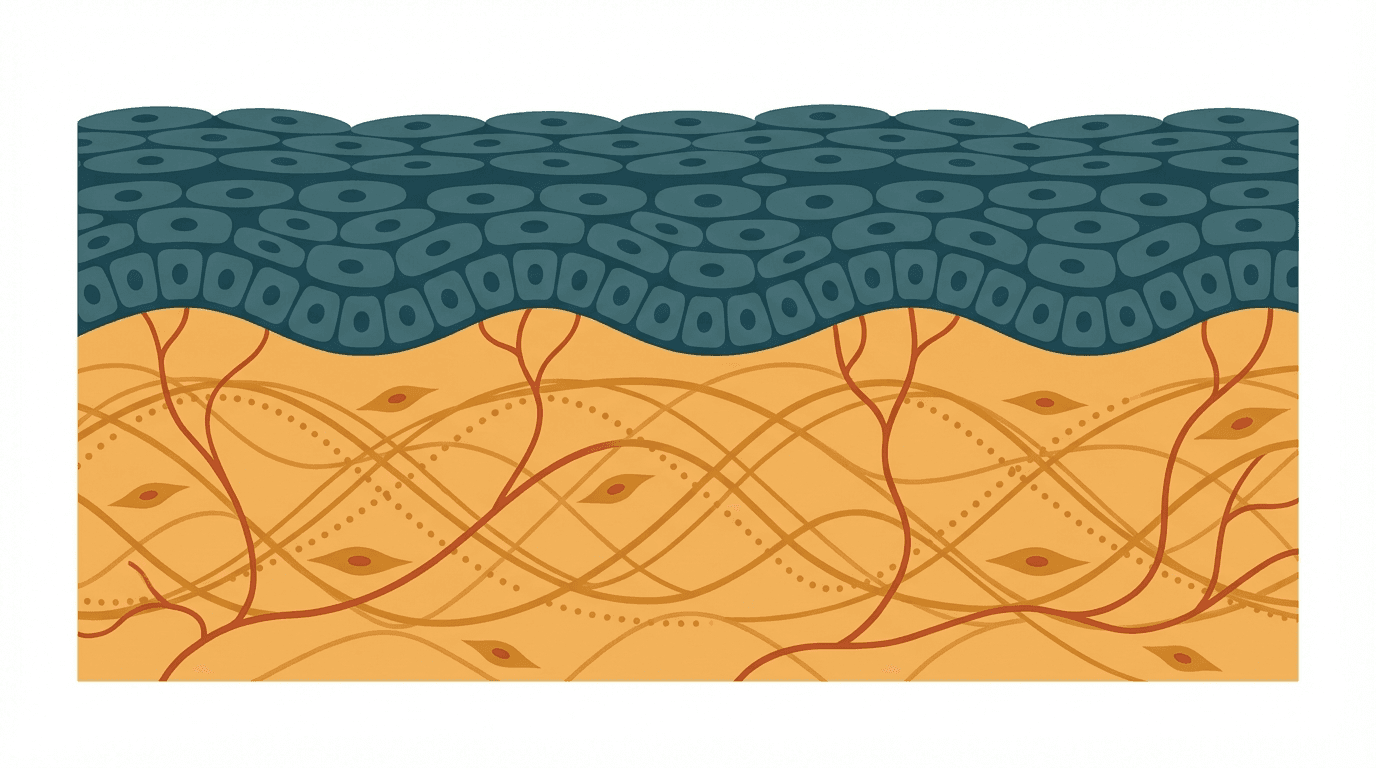
Skin-active peptides represent one of the most evidence-backed categories in cosmetic dermatology. These short-chain amino acid sequences penetrate the epidermis to signal fibroblasts, stimulate collagen and elastin synthesis, inhibit neuromuscular contraction (reducing expression lines), and accelerate wound repair. Unlike retinoids or chemical exfoliants that work by damaging the outer skin layer to trigger renewal, peptides directly upregulate the molecular machinery responsible for producing structural proteins — making them suitable even for sensitive skin. The most clinically validated peptides for skin health include copper-bound GHK (GHK-Cu), palmitoyl pentapeptide-4 (Matrixyl), and acetyl hexapeptide-3 (Argireline), each targeting different aspects of skin aging.
Best Peptides for Skin Health & Rejuvenation
Mechanism: Copper tripeptide complex that activates over 4,000 genes involved in tissue remodeling, stimulates collagen I/III synthesis, increases glycosaminoglycan production, and promotes angiogenesis in dermal tissue
Key benefit: Broad-spectrum skin remodeling — improves firmness, elasticity, thickness, and clarity while reducing fine lines and photodamage
Mechanism: Mimics collagen fragments (matrikines) to signal fibroblasts via TGF-β pathway, tricking the skin into producing new collagen and fibronectin as if repairing a wound
Key benefit: Clinically proven to reduce wrinkle depth and volume by stimulating collagen I, III, and IV synthesis without irritation
Mechanism: Inhibits SNARE complex formation at the neuromuscular junction, reducing acetylcholine release and attenuating facial muscle contractions that cause expression lines
Key benefit: Non-invasive alternative to botulinum toxin for reducing forehead lines and crow's feet — often called "topical Botox"
Mechanism: Extended version of Argireline that targets a broader range of SNARE proteins, providing more potent inhibition of the exocytosis mechanism that triggers muscle contraction
Key benefit: Enhanced wrinkle-smoothing activity compared to Argireline, particularly effective on deep expression lines around the forehead and eyes
Mechanism: Naturally occurring tripeptide that modulates gene expression toward tissue repair, increases decorin synthesis (which regulates collagen fibril assembly), and suppresses pro-inflammatory cytokines in skin
Key benefit: Foundational skin-repair peptide that improves wound healing speed and skin barrier function even without copper chelation
Mechanism: Gastric pentadecapeptide that promotes angiogenesis via VEGF upregulation and accelerates granulation tissue formation, potentially enhancing blood supply to dermal tissue
Key benefit: Accelerates healing of skin wounds, burns, and post-procedure recovery — primarily studied systemically but with growing interest for topical dermal applications
Quick Comparison
| Peptide | Efficacy | Key Benefit | Profile |
|---|---|---|---|
| GHK-Cu | high | Broad-spectrum skin remodeling — improves firmness, elasticity, thickness, and clarity while reducing fine lines and photodamage | View → |
| Matrixyl (Palmitoyl Pentapeptide-4) | high | Clinically proven to reduce wrinkle depth and volume by stimulating collagen I, III, and IV synthesis without irritation | View → |
| Argireline (Acetyl Hexapeptide-3) | moderate | Non-invasive alternative to botulinum toxin for reducing forehead lines and crow's feet — often called "topical Botox" | View → |
| SNAP-8 (Acetyl Octapeptide-3) | moderate | Enhanced wrinkle-smoothing activity compared to Argireline, particularly effective on deep expression lines around the forehead and eyes | View → |
| GHK (Glycyl-L-histidyl-L-lysine) | moderate | Foundational skin-repair peptide that improves wound healing speed and skin barrier function even without copper chelation | View → |
| BPC-157 | emerging | Accelerates healing of skin wounds, burns, and post-procedure recovery — primarily studied systemically but with growing interest for topical dermal applications | View → |
References
- GHK peptide as a natural modulator of multiple cellular pathways in skin regeneration (2015) — PubMed
- Topical application of palmitoyl pentapeptide increases skin thickness, pillar density, and angiogenesis in the photodamaged skin (2005) — PubMed
- Anti-wrinkle activity of acetyl hexapeptide-3 in a rat model and a controlled clinical study (2002) — PubMed
- Copper tripeptide complex: the effect on human dermal fibroblast cells proliferation and extracellular matrix expression (2021) — PubMed
- Cosmeceutical peptides in the framework of sustainable wellness economy (2021) — PubMed
Frequently Asked Questions
What are the best peptides for reducing wrinkles?
Are peptide skincare products actually effective?
Can peptides replace Botox for wrinkles?
How long do peptides take to improve skin?
Is GHK-Cu the best peptide for overall skin health?
Explore next
- GHK-CuBroad-spectrum skin remodeling — improves firmness, elasticity, thickness, and clarity while reducing fine lines and photodamage
- Matrixyl (Palmitoyl Pentapeptide-4)Clinically proven to reduce wrinkle depth and volume by stimulating collagen I, III, and IV synthesis without irritation
- Argireline (Acetyl Hexapeptide-3)Non-invasive alternative to botulinum toxin for reducing forehead lines and crow's feet — often called "topical Botox"
- SNAP-8 (Acetyl Octapeptide-3)Enhanced wrinkle-smoothing activity compared to Argireline, particularly effective on deep expression lines around the forehead and eyes
- GHK-Cu dosage guideEducational reference for GHK-Cu (copper peptide) dosage protocols including subcutaneous injection, topical application, and microneedling as discussed in published research.
- BPC-157 dosage guideComprehensive BPC-157 dosage guide covering subcutaneous, intramuscular, and oral administration protocols. Includes reconstitution instructions, cycle guidance, stacking considerations, and references to published preclinical research on this gastric pentadecapeptide.