Best Peptides for Athletic Recovery (2026 Guide)
A comprehensive guide to the best peptides for athletic recovery, post-workout repair, injury prevention, and faster return to training. Covers growth hormone secretagogues, tissue repair peptides, and muscle damage recovery with evidence ratings.
Overview
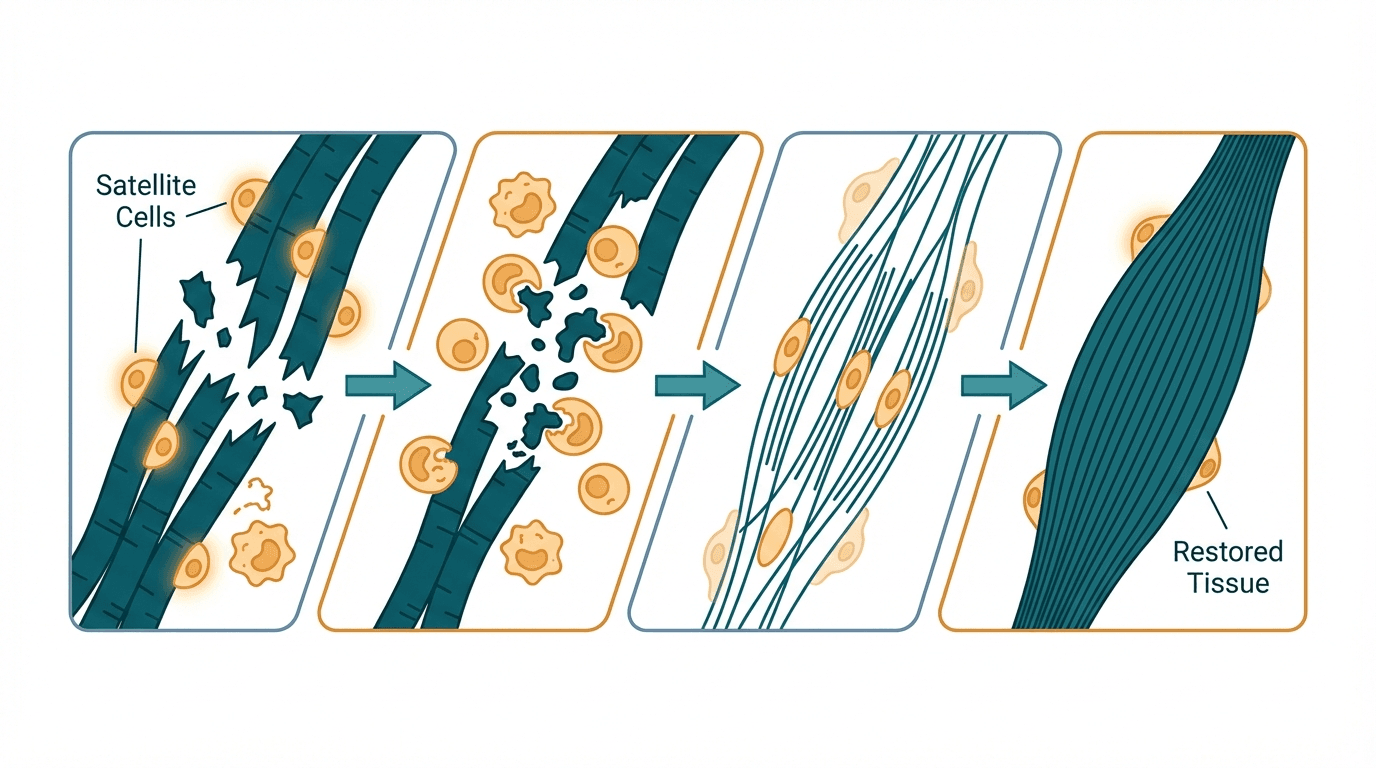
Athletic recovery is the rate-limiting factor in training progression — you can only train as hard as you can recover. Peptides offer a targeted approach to accelerating recovery by stimulating growth hormone release, promoting tissue repair at the cellular level, and reducing exercise-induced inflammation. Unlike anabolic steroids, recovery peptides work with the body's own repair mechanisms, upregulating natural growth hormone pulsatility and directing cellular migration to damaged tissue. The most effective recovery protocols combine direct tissue repair peptides (BPC-157, TB-500) with growth hormone secretagogues (Ipamorelin, MK-677) that elevate the systemic anabolic environment needed for comprehensive post-training adaptation.
Best Peptides for Athletic Recovery
Mechanism: Upregulates growth hormone receptors in tendon fibroblasts, promotes angiogenesis via VEGF pathway, and accelerates nitric oxide synthesis for enhanced blood flow to damaged tissues
Key benefit: Rapid repair of exercise-induced tendon and muscle damage with localized anti-inflammatory effects
Mechanism: Upregulates actin protein to promote cell migration, builds new blood vessels in damaged tissue, and reduces systemic inflammation via NF-kB modulation
Key benefit: Systemic recovery acceleration — reaches injuries throughout the body regardless of injection site
Mechanism: Selective ghrelin receptor agonist that triggers pulsatile growth hormone release from the anterior pituitary without significantly affecting cortisol or prolactin
Key benefit: Clean GH elevation that enhances overnight recovery, sleep quality, and soft tissue repair without the side effects of GHRP-6 or Hexarelin
Mechanism: Oral growth hormone secretagogue that mimics ghrelin signaling to sustain elevated GH and IGF-1 levels for up to 24 hours per dose
Key benefit: Convenient oral dosing that raises IGF-1 levels comparable to low-dose GH injections, improving recovery without injection burden
Mechanism: Mechano Growth Factor is a splice variant of IGF-1 released locally in response to muscle damage, activating satellite cells to fuse with existing muscle fibers
Key benefit: Directly stimulates muscle satellite cell proliferation at the site of exercise-induced damage for faster hypertrophy and repair
Quick Comparison
| Peptide | Efficacy | Key Benefit | Profile |
|---|---|---|---|
| BPC-157 | high | Rapid repair of exercise-induced tendon and muscle damage with localized anti-inflammatory effects | View → |
| TB-500 | high | Systemic recovery acceleration — reaches injuries throughout the body regardless of injection site | View → |
| Ipamorelin | moderate | Clean GH elevation that enhances overnight recovery, sleep quality, and soft tissue repair without the side effects of GHRP-6 or Hexarelin | View → |
| MK-677 | moderate | Convenient oral dosing that raises IGF-1 levels comparable to low-dose GH injections, improving recovery without injection burden | View → |
| MGF | emerging | Directly stimulates muscle satellite cell proliferation at the site of exercise-induced damage for faster hypertrophy and repair | View → |
References
- Stable gastric pentadecapeptide BPC 157 in the treatment of colitis and ischemia and reperfusion in rats: New insights (2018) — PubMed
- Thymosin beta4 promotes dermal wound healing via its actin-binding domain (2007) — PubMed
- Ipamorelin, a new growth-hormone-releasing peptide, induces growth hormone release in vitro and in vivo in beagle dogs (1998) — PubMed
- MK-0677, an orally active growth hormone secretagogue, reverses diet-induced catabolism (1998) — PubMed
- Mechano growth factor (MGF) splice variant mRNA is expressed in human skeletal muscle following eccentric exercise (2003) — PubMed
Frequently Asked Questions
What are the best peptides for post-workout recovery?
How quickly do recovery peptides work for athletes?
Are recovery peptides banned in sports?
Can I stack BPC-157 and TB-500 for recovery?
Is MK-677 better than Ipamorelin for recovery?
Explore next
- BPC-157Rapid repair of exercise-induced tendon and muscle damage with localized anti-inflammatory effects
- TB-500Systemic recovery acceleration — reaches injuries throughout the body regardless of injection site
- IpamorelinClean GH elevation that enhances overnight recovery, sleep quality, and soft tissue repair without the side effects of GHRP-6 or Hexarelin
- MK-677Convenient oral dosing that raises IGF-1 levels comparable to low-dose GH injections, improving recovery without injection burden
- BPC-157 dosage guideComprehensive BPC-157 dosage guide covering subcutaneous, intramuscular, and oral administration protocols. Includes reconstitution instructions, cycle guidance, stacking considerations, and references to published preclinical research on this gastric pentadecapeptide.
- TB-500 dosage guideEducational reference covering TB-500 (Thymosin Beta-4) dosage protocols, including loading and maintenance phases, reconstitution, and administration details as discussed in research literature.
- Ipamorelin dosage guideEducational reference for ipamorelin dosage protocols, optimal timing, and administration guidelines as discussed in published research studies.
- MK-677 dosage guideEducational reference for MK-677 (ibutamoren) oral dosage protocols discussed in research literature. Covers conservative, standard, and advanced dosing approaches for this oral growth hormone secretagogue.