Epithalon vs GHK-Cu
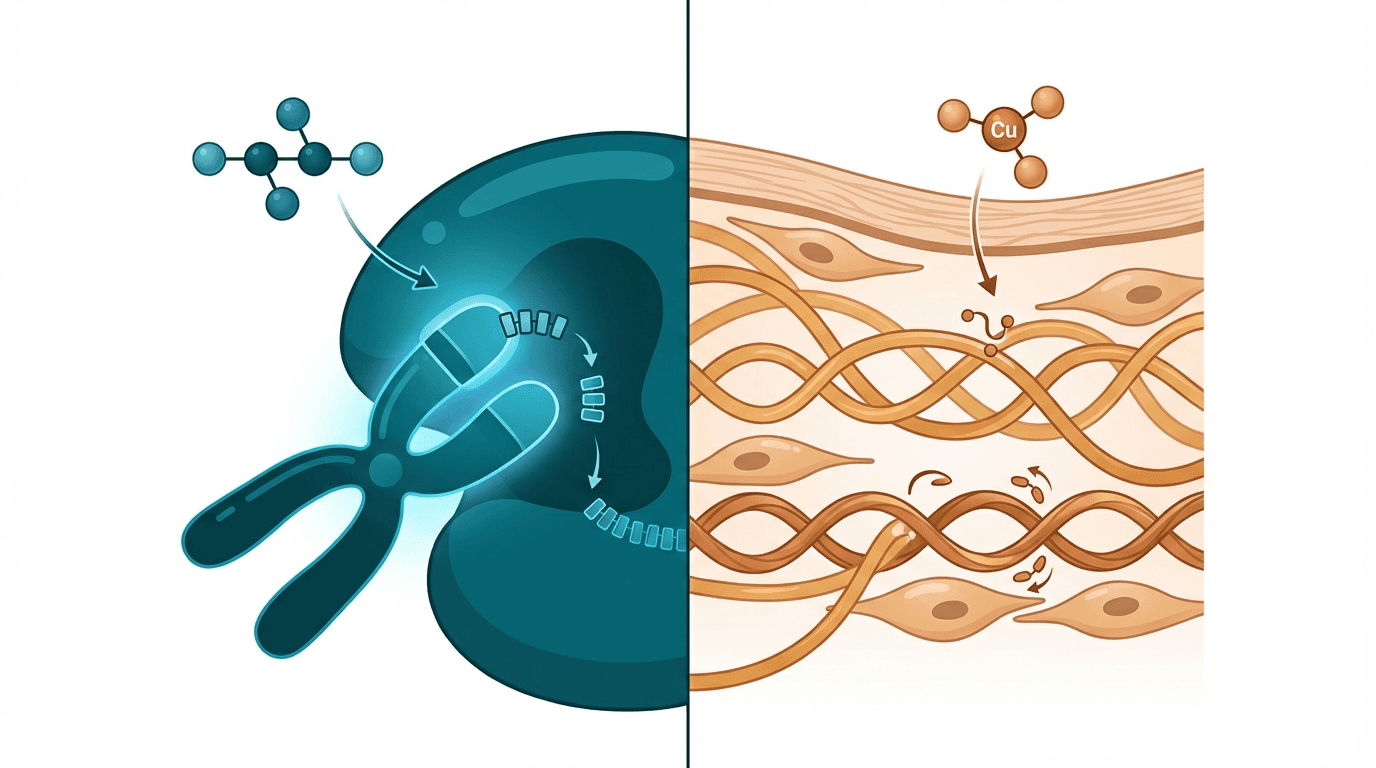
Epithalon (also spelled epitalon) and GHK-Cu are both anti-aging peptides but operate through entirely different mechanisms at different biological levels. Epithalon is a synthetic tetrapeptide (Ala-Glu-Asp-Gly) developed by Professor Vladimir Khavinson that activates telomerase, the enzyme responsible for maintaining telomere length — targeting aging at the chromosomal level. GHK-Cu is a naturally occurring copper tripeptide that combats aging at the tissue level through collagen synthesis, gene expression remodeling, and antioxidant defense. Epithalon addresses cellular longevity while GHK-Cu addresses tissue quality and regeneration.
Head-to-Head Comparison
| Criteria | Epithalon | GHK-Cu |
|---|---|---|
| Primary mechanism | Telomerase activation — maintains/extends telomere length | Copper-dependent collagen synthesis, gene expression modulation, matrix remodeling |
| Anti-aging target | Cellular/chromosomal — prevents replicative senescence | Tissue/extracellular — improves skin, wound healing, and tissue quality |
| Origin | Synthetic analogue of epithalamin (pineal gland extract) | Naturally occurring in human plasma, saliva, and urine |
| Route of administration | Subcutaneous injection or intranasal | Topical (cream/serum), subcutaneous, or intradermal |
| Typical protocol | 5–10 mg daily for 10–20 days, repeated 1–2x per year | 1–2 mg daily (injectable) or 1–4% cream continuously (topical) |
| Visible cosmetic effects | Indirect — may improve skin over months via telomere maintenance | Direct — visible skin improvement, reduced wrinkles, improved firmness within weeks |
| Melatonin / sleep effects | Yes — normalizes melatonin production via pineal gland regulation | No direct effect on sleep or circadian rhythm |
| Gene expression modulation | Primarily telomerase (hTERT) gene activation | Broad — modulates 4,000+ human genes toward healthier expression patterns |
| Wound healing | Not a primary application | Excellent — direct collagen/elastin stimulation, accelerated wound closure |
| Cancer safety considerations | Theoretical concern — telomerase activation is also a hallmark of cancer cells | Favorable profile — gene expression studies suggest anti-cancer gene activation |
| Research origin | Russian gerontology research (St. Petersburg Institute of Bioregulation) | American research (Dr. Loren Pickart, University of California) |
| Approximate monthly cost | $80–$150 (cycled, not continuous) | $30–$60 (topical); $50–$100 (injectable) |
When to Choose Each
Verdict
Epithalon and GHK-Cu address aging at fundamentally different biological levels and are more complementary than competitive. Epithalon targets the root of cellular aging — telomere shortening — through telomerase activation, potentially extending cellular lifespan and normalizing melatonin cycles. GHK-Cu targets the visible and functional consequences of aging — tissue quality, collagen loss, and chronic inflammation — with immediate regenerative effects. For a comprehensive anti-aging strategy, using both is logical: Epithalon in periodic cycles for cellular longevity and GHK-Cu continuously for tissue maintenance and cosmetic anti-aging.
References
- Peptide bioregulator epithalon increases the rate of telomere elongation in human somatic cells (2003) — PubMed
- GHK peptide as a natural modulator of multiple cellular pathways in skin regeneration (2015) — PubMed
- Peptide regulation of ageing: 35-year research experience (2011) — PubMed
- The human tripeptide GHK-Cu in prevention of oxidative stress and degenerative conditions of aging (2012) — PubMed
- Effect of epithalon on the activity of telomerase and the lifespan of human fetal fibroblasts (2004) — PubMed
Frequently Asked Questions
Can epithalon and GHK-Cu be used together for anti-aging?
Does epithalon increase cancer risk by activating telomerase?
Which provides faster visible anti-aging results?
How long do the effects of epithalon last after a cycle?
How do epithalon and GHK-Cu compare in cost for an anti-aging protocol?
Explore next
- Epithalon dosage guideEducational reference covering epithalon (epitalon) dosage protocols, cycling schedules, reconstitution instructions, and telomerase activation research. Dosing information discussed in published studies for informational purposes only.
- GHK-Cu dosage guideEducational reference for GHK-Cu (copper peptide) dosage protocols including subcutaneous injection, topical application, and microneedling as discussed in published research.
- Reconstitution CalculatorCalculate exactly how many units to draw on your syringe. Enter your vial size, bacteriostatic water volume, and desired dose.
- Dosage CalculatorFind evidence-based dosing ranges for any peptide. Adjust for body weight, experience level, and administration route.
- Cost CalculatorEstimate peptide costs per dose, per week, per month, and per year. Enter your vial price and dosing schedule to plan your budget.