IGF-1 LR3 vs MK-677
IGF-1 LR3 and MK-677 (ibutamoren) both elevate IGF-1 levels but through fundamentally different approaches. IGF-1 LR3 is a modified version of insulin-like growth factor 1 with an extended half-life of over 20 hours that directly activates IGF-1 receptors, bypassing the entire GH axis. MK-677 is an oral growth hormone secretagogue that stimulates the ghrelin receptor (GHS-R1a) to increase endogenous GH and IGF-1 secretion naturally. IGF-1 LR3 is more potent and direct but carries greater risks including hypoglycemia and uncontrolled tissue growth, while MK-677 offers a gentler, oral approach with predictable side effects like increased appetite and water retention.
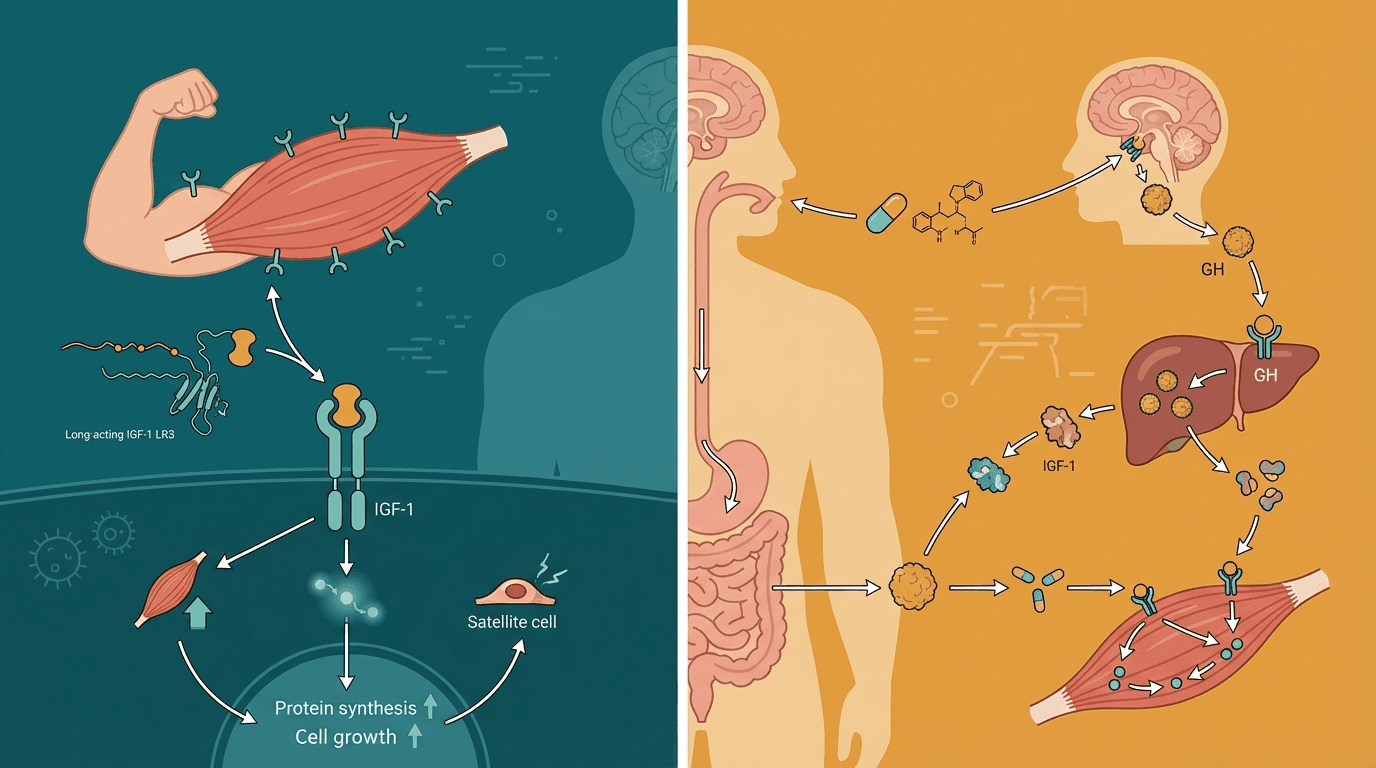
Head-to-Head Comparison
| Criteria | IGF-1 LR3 | MK-677 |
|---|---|---|
| Primary mechanism | Directly activates IGF-1 receptors — bypasses GH axis entirely | Oral ghrelin receptor (GHS-R1a) agonist — stimulates endogenous GH/IGF-1 release |
| Route of administration | Intramuscular or subcutaneous injection | Oral (capsule or liquid) |
| Half-life | 20–30 hours (vs ~15 minutes for native IGF-1) | ~24 hours (supports once-daily dosing) |
| Typical dosage | 20–80 mcg/day, split into 1–2 injections (often post-workout) | 10–25 mg/day, taken orally once daily (usually before bed) |
| Effect on GH levels | No direct effect on GH — actually suppresses endogenous GH via negative feedback | Increases GH secretion by 40–60% and IGF-1 by 40–100% within weeks |
| Hypoglycemia risk | Significant — IGF-1 LR3 directly lowers blood glucose; hypoglycemic episodes can occur | Low — may slightly increase fasting blood glucose and insulin resistance over time |
| Effect on appetite | Minimal direct appetite effect | Strong appetite stimulation (ghrelin mimicry) — a major side effect for many users |
| Muscle growth potential | High — directly stimulates muscle protein synthesis and hyperplasia (new muscle cells) | Moderate — indirectly supports muscle growth through elevated GH/IGF-1 axis |
| Water retention | Mild | Significant — GH elevation causes noticeable water retention and bloating |
| Safety profile | Higher risk — potential for hypoglycemia, organ growth, tumor promotion; requires careful monitoring | Generally well-tolerated — appetite increase, water retention, mild lethargy; long-term safety data available |
| Research status | Preclinical for muscle/performance use; clinical research for IGF-1 deficiency conditions | Phase 2 completed for multiple indications; extensive clinical trial data over 2+ years |
| Approximate monthly cost | $100–$250 (research grade) | $30–$80 (widely available as research chemical) |
When to Choose Each
Choose IGF-1 LR3
Advanced bodybuilders seeking muscle hyperplasia, IGF-1 deficiency conditions, users who have maximized GH secretagogue benefits and want direct IGF-1 receptor activation
Choose MK-677
Beginners to GH optimization, anti-aging protocols, sleep quality improvement, appetite stimulation (for hardgainers), convenient oral dosing without injections
Verdict
MK-677 is the better starting point for most users due to its oral convenience, well-characterized safety profile, and ability to raise GH/IGF-1 through natural physiologic pathways. It is particularly suited for anti-aging, sleep improvement, and gradual body composition changes. IGF-1 LR3 is a more aggressive option for experienced users specifically targeting maximum muscle growth or hyperplasia — but its direct mechanism means higher risks including hypoglycemia, potential organ enlargement, and theoretical tumor promotion. For anyone not competing at an advanced level, MK-677 provides a far more favorable risk-to-benefit ratio.
References
- Effect of oral administration of ibutamoren mesylate (MK-677) on insulin-like growth factor I in healthy adults (1998) — PubMed
- Two-year treatment of growth hormone-deficient adults with MK-677 (ibutamoren mesylate) (2001) — PubMed
- Effects of an oral ghrelin mimetic (MK-677) on body composition and functional ability of older adults (2008) — PubMed
- Insulin-like growth factor-I LR3 promotes skeletal muscle hypertrophy independent of load (2010) — PubMed
- MK-677, an orally active growth hormone secretagogue, reverses diet-induced catabolism (1998) — PubMed
Frequently Asked Questions
Can I take MK-677 and IGF-1 LR3 together?
Does MK-677 cause diabetes?
Why is IGF-1 LR3 so much more potent than regular IGF-1?
How long can I take MK-677 continuously?
What blood work should I monitor when using IGF-1 LR3 or MK-677?
Explore next
- Reconstitution CalculatorCalculate exactly how many units to draw on your syringe. Enter your vial size, bacteriostatic water volume, and desired dose.
- Dosage CalculatorFind evidence-based dosing ranges for any peptide. Adjust for body weight, experience level, and administration route.
- Cost CalculatorEstimate peptide costs per dose, per week, per month, and per year. Enter your vial price and dosing schedule to plan your budget.