CJC-1295 (no DAC) vs CJC-1295 DAC
CJC-1295 (no DAC), also known as Modified GRF 1-29 or MOD-GRF, and CJC-1295 DAC are two formulations of the same base growth hormone-releasing hormone (GHRH) analog, but they differ dramatically in pharmacokinetics and physiological effect. The no-DAC version has a ~30-minute half-life, requires daily injection, and preserves the natural pulsatile pattern of growth hormone release. The DAC (Drug Affinity Complex) version binds to albumin for an ~8-day half-life, requires only weekly dosing, but produces constant elevated GH levels that override natural pulsatility. Most experienced users and clinics prefer the no-DAC version for its more physiological GH release pattern.
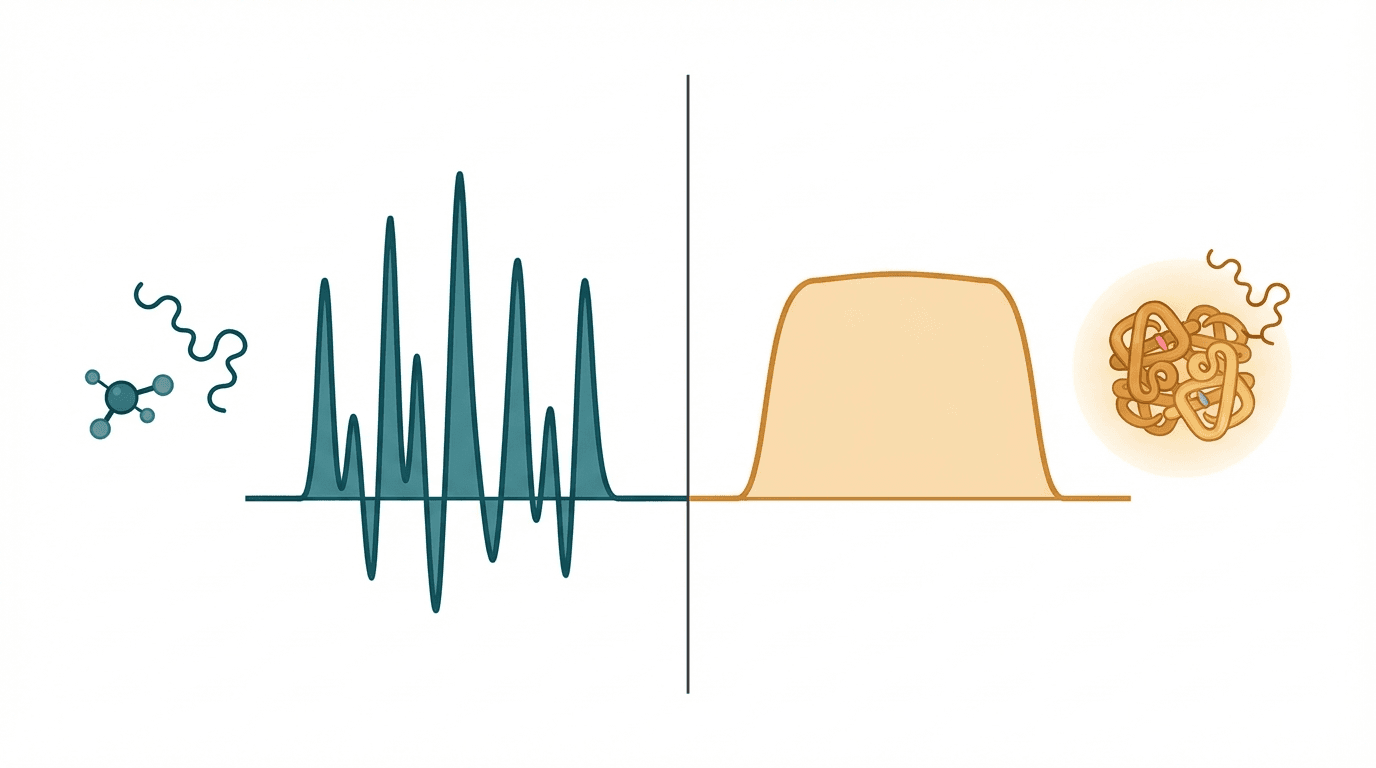
Head-to-Head Comparison
| Criteria | CJC-1295 (no DAC) | CJC-1295 DAC |
|---|---|---|
| Primary mechanism | GHRH analog — stimulates pulsatile GH release from anterior pituitary | GHRH analog with albumin-binding DAC — sustained GH elevation from anterior pituitary |
| Half-life | ~30 minutes | ~8 days (due to albumin binding via Drug Affinity Complex) |
| Injection frequency | 1–3× daily (typically before bed and/or upon waking) | 1–2× per week |
| GH release pattern | Pulsatile — mimics natural GH secretion rhythm | Constant elevation — overrides natural pulsatile pattern (GH "bleed") |
| Peak GH amplitude | Higher peak GH pulses (sharp, physiological spikes) | Lower but sustained GH levels (elevated baseline without sharp peaks) |
| IGF-1 elevation | Moderate sustained IGF-1 increase | Higher sustained IGF-1 increase (due to constant GH stimulation) |
| Best paired with | GHRP (Ipamorelin, GHRP-6, GHRP-2, Hexarelin) for synergistic pulsatile release | Can be used alone due to long half-life; less commonly paired with GHRPs |
| Receptor desensitization risk | Low — pulsatile stimulation allows receptor recovery between doses | Higher — constant GHRH receptor stimulation may lead to receptor downregulation over time |
| Convenience | Lower — requires daily injections, often multiple per day | Higher — weekly injection only |
| Side effects | Mild — water retention, tingling, increased hunger (transient around injection) | More pronounced — sustained water retention, potential cortisol/prolactin elevation, injection site reactions |
| Preferred by clinicians | Yes — most anti-aging and peptide clinics prefer no-DAC for physiological mimicry | Less commonly prescribed — some clinics use for convenience-focused patients |
| Approximate monthly cost | $50–$100/month | $60–$120/month |
When to Choose Each
Choose CJC-1295 (no DAC)
Physiological GH optimization, pairing with GHRP peptides (Ipamorelin stack), anti-aging protocols, body composition improvement, users who want to mimic natural GH pulsatility
Choose CJC-1295 DAC
Maximum convenience (weekly dosing), patients who cannot inject daily, sustained IGF-1 elevation for recovery, users prioritizing simplicity over optimal GH kinetics
Verdict
CJC-1295 without DAC (MOD-GRF 1-29) is the preferred choice for most users seeking growth hormone optimization. Its short half-life preserves the natural pulsatile GH release pattern that the body is designed for, avoids receptor desensitization, and pairs synergistically with GHRPs like Ipamorelin for amplified GH pulses. CJC-1295 DAC is better suited for users who prioritize convenience and cannot commit to daily injections — but the constant GH elevation it produces is less physiological and may lead to more side effects (sustained water retention, potential receptor downregulation) over time. The standard clinical protocol is CJC-1295 no-DAC + Ipamorelin dosed 1–3 times daily.
References
- Prolonged stimulation of growth hormone (GH) and insulin-like growth factor I secretion by CJC-1295, a long-acting analog of GH-releasing hormone (2006) — PubMed
- Modified (Mod) GRF 1-29 and growth hormone secretagogue peptides: clinical applications (2012) — PubMed
- Growth hormone-releasing hormone analog enhances GH pulsatility and IGF-I levels in healthy men (2006) — PubMed
- Drug Affinity Complex (DAC) technology for half-life extension of peptide therapeutics (2006) — PubMed
Frequently Asked Questions
What is the Drug Affinity Complex (DAC) and how does it work?
Why is pulsatile GH release considered better than constant elevation?
What is the best CJC-1295 (no DAC) + Ipamorelin protocol?
Does CJC-1295 (either version) suppress natural GH production?
How do I know which version of CJC-1295 I am buying?
Explore next
- Reconstitution CalculatorCalculate exactly how many units to draw on your syringe. Enter your vial size, bacteriostatic water volume, and desired dose.
- Dosage CalculatorFind evidence-based dosing ranges for any peptide. Adjust for body weight, experience level, and administration route.
- Cost CalculatorEstimate peptide costs per dose, per week, per month, and per year. Enter your vial price and dosing schedule to plan your budget.