AOD-9604 vs Semaglutide
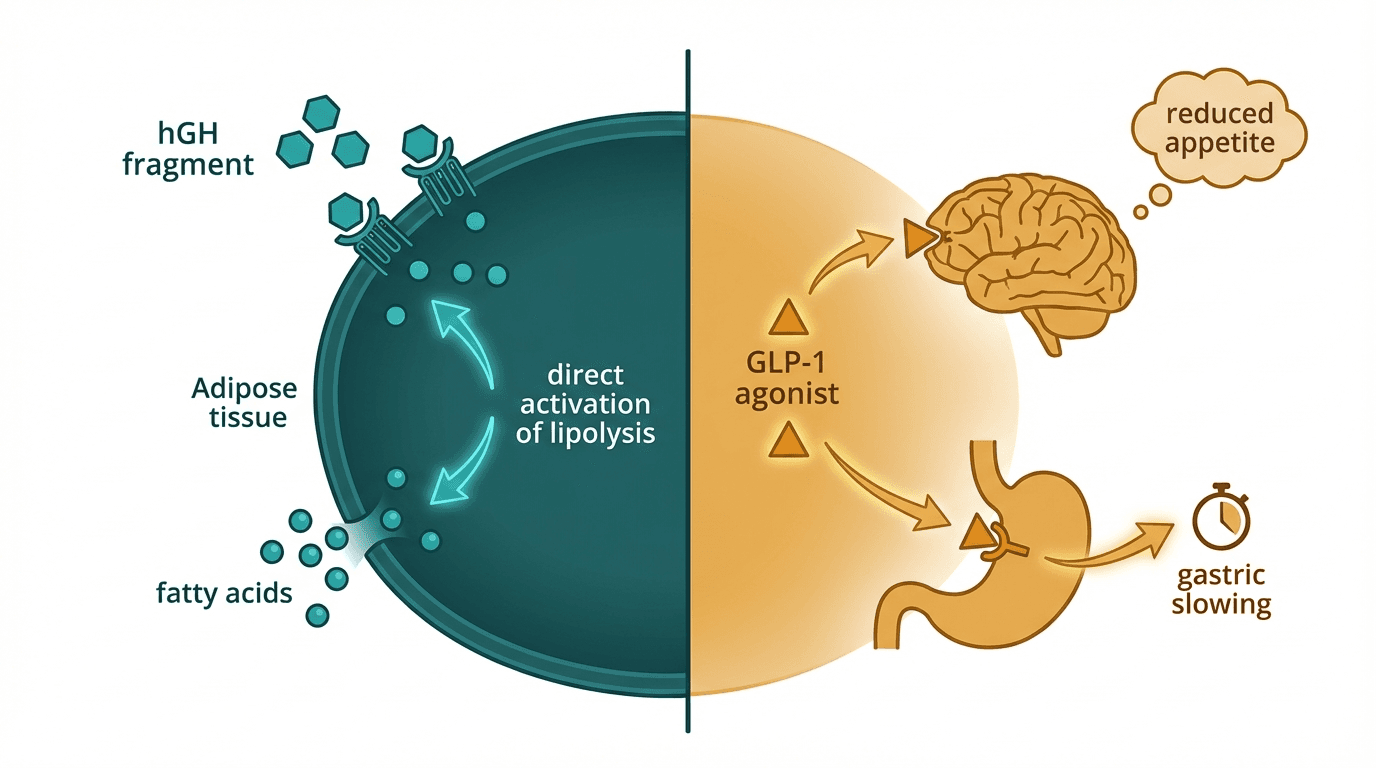
AOD-9604 and semaglutide take fundamentally different approaches to fat loss. AOD-9604 (Advanced Obesity Drug) is a modified fragment of human growth hormone (amino acids 177-191) that stimulates lipolysis and inhibits lipogenesis without the metabolic side effects of full HGH. Semaglutide is an FDA-approved GLP-1 receptor agonist that suppresses appetite centrally and produces ~15% total body weight loss. While AOD-9604 is popular in anti-aging clinics and far cheaper, it has failed to demonstrate meaningful weight loss in human clinical trials, whereas semaglutide has the strongest clinical evidence base of any obesity medication ever developed.
Head-to-Head Comparison
| Criteria | AOD-9604 | Semaglutide |
|---|---|---|
| Primary mechanism | HGH fragment — stimulates lipolysis and inhibits lipogenesis via fat-specific beta-3 adrenergic pathway | GLP-1 receptor agonist — central appetite suppression, delayed gastric emptying, insulin sensitization |
| Best for | Targeted fat metabolism support, body recomposition protocols, patients who cannot tolerate GLP-1 side effects | Significant weight loss (>10%), type 2 diabetes, cardiovascular risk reduction |
| Route of administration | Subcutaneous injection (typically abdominal area) | Once-weekly subcutaneous injection or once-daily oral tablet |
| Typical dosage | 250–300 mcg daily, injected on empty stomach | 0.25 mg escalating to 2.4 mg weekly (Wegovy) |
| Average weight loss | Not demonstrated in Phase 3 trials; 2.8 kg average loss in failed Phase 2b (not significant vs placebo) | ~15.3% body weight at 68 weeks (STEP 1) |
| Half-life | ~30 minutes (very short, requires daily dosing) | ~7 days (once-weekly dosing) |
| FDA status | Not FDA-approved for any indication; GRAS status in Australia for food use only; clinical trials discontinued | FDA-approved: Wegovy (obesity, 2021), Ozempic (T2D, 2017) |
| Clinical evidence strength | Weak — Phase 2b trial failed primary endpoint; most evidence is preclinical (animal models) | Very strong — multiple Phase 3 trials (STEP program), cardiovascular outcomes (SELECT), 30,000+ trial participants |
| Side effects | Minimal reported — injection site reactions, mild headache; does not affect blood sugar or IGF-1 levels | Nausea (44%), vomiting (24%), diarrhea (30%), constipation (24%) |
| Effect on muscle mass | Claimed to preserve lean mass (HGH fragment — no anabolic effects but no catabolic effects) | ~25–40% of weight loss is lean mass (a concern with all GLP-1 agonists) |
| Effect on appetite | No appetite suppression — works on fat cells directly | Strong appetite suppression — reduces hunger and food reward signaling |
| Approximate monthly cost | $50–$150/month (research peptide) | $1,350–$1,430/month (brand) or $200–$500 (compounded) |
When to Choose Each
Choose AOD-9604
Cost-conscious individuals seeking mild fat metabolism support, body recomposition protocols combined with exercise, patients who cannot tolerate GLP-1 side effects, or those wanting a low-risk peptide without appetite/blood sugar effects
Choose Semaglutide
Anyone needing clinically meaningful weight loss (>10% body weight), patients with type 2 diabetes, cardiovascular disease risk reduction, or anyone wanting an FDA-approved medication with robust clinical evidence
Verdict
Semaglutide is the objectively superior choice for meaningful weight loss, backed by massive clinical trials, FDA approval, and proven cardiovascular benefits. AOD-9604 is popular in anti-aging and biohacking circles due to its low cost, minimal side effects, and theoretical fat-targeted mechanism, but it failed its pivotal clinical trial and lacks robust human evidence for weight loss efficacy. AOD-9604 may have a niche role in body recomposition protocols for individuals seeking modest fat metabolism support without appetite suppression or GI side effects, but anyone expecting significant weight loss should choose semaglutide or another proven GLP-1 agonist.
References
- A double-blind placebo-controlled trial of the efficacy and safety of AOD9604 in obese subjects (2009) — PubMed
- Once-weekly semaglutide in adults with overweight or obesity (STEP 1) (2021) — PubMed
- The lipolytic actions of GH and IGF-I and the metabolic effects of the AOD9604 peptide (2001) — PubMed
- Semaglutide and cardiovascular outcomes in patients with overweight or obesity (SELECT) (2023) — PubMed
Frequently Asked Questions
Why is AOD-9604 popular if it failed clinical trials?
Can I stack AOD-9604 with semaglutide?
Does AOD-9604 affect blood sugar or insulin like HGH does?
What happened in the AOD-9604 clinical trials?
Can AOD-9604 or semaglutide be used for spot fat reduction?
Explore next
- AOD-9604 dosage guideEducational reference for AOD-9604 (hGH fragment 176-191) dosage protocols discussed in research literature. Covers subcutaneous injection and oral administration approaches for fat loss.
- Semaglutide dosage guideDetailed semaglutide dosage chart covering weight management titration (Wegovy), type 2 diabetes dosing (Ozempic), and oral semaglutide (Rybelsus). Includes compounded reconstitution instructions, side effect profiles, and cycle guidance based on published STEP trial data.