5-Amino-1MQ vs AOD-9604
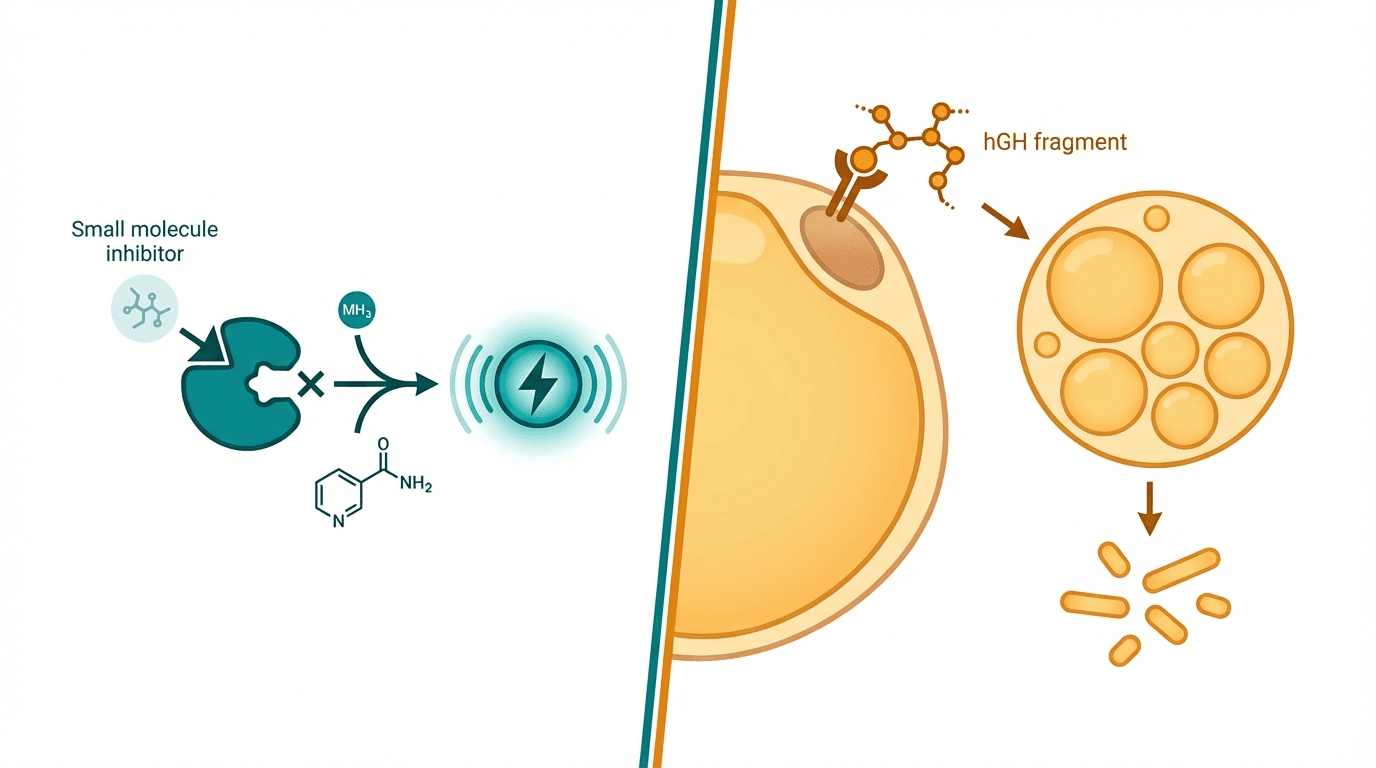
5-Amino-1MQ and AOD-9604 are both used for fat loss but work through entirely different biochemical pathways. 5-Amino-1MQ is a small molecule inhibitor of the NNMT (nicotinamide N-methyltransferase) enzyme, which increases intracellular NAD+ levels and activates SIRT1-mediated metabolic pathways to boost cellular energy expenditure and reduce fat accumulation. AOD-9604 is a synthetic fragment of human growth hormone (amino acids 176–191) that stimulates lipolysis and inhibits lipogenesis through GH-receptor-mediated signaling without the diabetogenic or growth-promoting effects of full-length GH. 5-Amino-1MQ is oral and newer with less clinical data; AOD-9604 has a longer research history but notably failed a Phase 3 obesity trial despite continued use in clinical settings.
Head-to-Head Comparison
| Criteria | 5-Amino-1MQ | AOD-9604 |
|---|---|---|
| Primary mechanism | Inhibits NNMT enzyme — increases NAD+ and SAM levels, activates SIRT1 metabolic pathways | GH fragment (176–191) — stimulates lipolysis and inhibits lipogenesis via GH receptor C-terminal domain |
| Molecule type | Small molecule (methylquinolinium salt) — not technically a peptide | Peptide fragment — 16 amino acids from the C-terminus of human growth hormone |
| Route of administration | Oral (capsule) | Subcutaneous injection (typically into abdominal fat) |
| Typical dosage | 50–150 mg/day orally, often split into 1–2 doses | 250–300 mcg/day subcutaneous, taken on empty stomach (fasted morning) |
| Effect on NAD+ levels | Directly increases intracellular NAD+ by blocking NNMT-mediated NAD+ consumption | No direct effect on NAD+ metabolism |
| Effect on growth hormone axis | No direct effect on GH/IGF-1 axis | Does not raise GH or IGF-1 levels — isolated lipolytic fragment without systemic GH effects |
| Effect on blood sugar | May improve insulin sensitivity via enhanced NAD+/SIRT1 signaling | Neutral to slightly positive — does not cause insulin resistance (unlike full GH) |
| Fat loss mechanism | Increases basal metabolic rate at the cellular level; reduces fat cell differentiation and lipid accumulation | Stimulates breakdown of stored triglycerides (lipolysis); inhibits new fat formation (lipogenesis) |
| Clinical trial history | Preclinical — strong in vitro and animal data; no completed human clinical trials | Failed Phase 3 trial for obesity (Metabolic Pharmaceuticals, 2007); TGA-approved in Australia for specific formulations |
| Anti-aging / longevity overlap | Significant — NAD+ boosting and SIRT1 activation are core longevity pathways | Minimal — primarily targets fat metabolism without broader longevity signaling |
| Research depth | Emerging — first described 2017, limited but growing research base | Moderate — decades of GH fragment research, Phase 3 trial data, clinical use history |
| Approximate monthly cost | $60–$150 (oral capsules from research suppliers) | $40–$100 (research grade injectable) |
When to Choose Each
Choose 5-Amino-1MQ
Metabolic optimization and cellular energy, users wanting oral convenience (no injections), NAD+ and longevity-focused protocols, those interested in emerging NNMT science
Choose AOD-9604
Targeted fat loss without GH side effects, users comfortable with injections, those wanting a compound with longer research history, clinic-based weight management protocols
Verdict
For straightforward fat loss, AOD-9604 has a longer track record and a well-understood mechanism, though its failure in Phase 3 obesity trials tempers expectations — it may support fat loss as part of a broader protocol but is unlikely to produce dramatic results alone. 5-Amino-1MQ is the more intriguing option for users interested in metabolic optimization beyond pure fat loss, as its NNMT inhibition and NAD+ boosting connect to broader cellular health and longevity pathways. The oral convenience of 5-Amino-1MQ is a practical advantage over AOD-9604 injections. Neither compound should be expected to produce significant fat loss without caloric deficit and exercise — they are best viewed as metabolic support tools rather than standalone solutions.
References
- NNMT inhibition by 5-amino-1MQ reduces adiposity in diet-induced obese mice (2020) — PubMed
- AOD-9604: a novel anti-obesity drug which stimulates lipolysis and inhibits lipogenesis (2001) — PubMed
- Nicotinamide N-methyltransferase: an emerging target for metabolic syndrome and cancer (2014) — PubMed
- Chronic administration of AOD-9604 reduces body fat in obese Zucker rats (2002) — PubMed
- NNMT as a therapeutic target for metabolic disorders: structure, function, and inhibitor design (2019) — PubMed
Frequently Asked Questions
Can I stack 5-Amino-1MQ with AOD-9604?
Why did AOD-9604 fail its Phase 3 trial?
Is 5-Amino-1MQ the same as NMN or other NAD+ boosters?
Does AOD-9604 have any effects beyond fat loss?
Are 5-Amino-1MQ and AOD-9604 legal to purchase?
Explore next
- Reconstitution CalculatorCalculate exactly how many units to draw on your syringe. Enter your vial size, bacteriostatic water volume, and desired dose.
- Dosage CalculatorFind evidence-based dosing ranges for any peptide. Adjust for body weight, experience level, and administration route.
- Cost CalculatorEstimate peptide costs per dose, per week, per month, and per year. Enter your vial price and dosing schedule to plan your budget.