Tools
Peptide Concentration Calculator
Enter the total peptide content and diluent volume to find the concentration in mg/mL, mcg per syringe unit, and units per mg. Includes a worked dose example.
Quick presets
Concentration
2.50
mg/mL
Per syringe unit
25.0
mcg/unit
mg per unit
0.0250
mg/unit
Units per 1 mg
40.0
units (U-100)
Worked example
To draw 250 mcg (0.25 mg) from this solution, draw 10.0 units (0.1000 mL) on a U-100 syringe.
This vial yields 20 total doses at this dose size.
Show the math›
Concentration: 5 mg ÷ 2 mL = 2.5000 mg/mL
mg per unit: 2.5000 mg/mL ÷ 100 IU/mL = 0.025000 mg/unit
mcg per unit: 0.025000 mg × 1000 = 25.00 mcg/unit
Units per 1 mg: 100 IU/mL ÷ 2.5000 mg/mL = 40.00 units
Example: 250 mcg ÷ 1000 = 0.250 mg
0.250 mg × 40.00 units/mg = 10.00 units
10.00 units ÷ 100 IU/mL = 0.1000 mL
Doses in vial: floor(5 mg × 1000 ÷ 250 mcg) = 20
Assumptions
- Default syringe type is U-100 (1 mL = 100 units) — the standard for peptide injections
- Concentration assumes the peptide is fully dissolved and evenly distributed
- Total mL is the amount of diluent added (bacteriostatic water, sterile water, etc.)
- Does not account for vial overfill or dead volume in syringes
How This Calculator Works
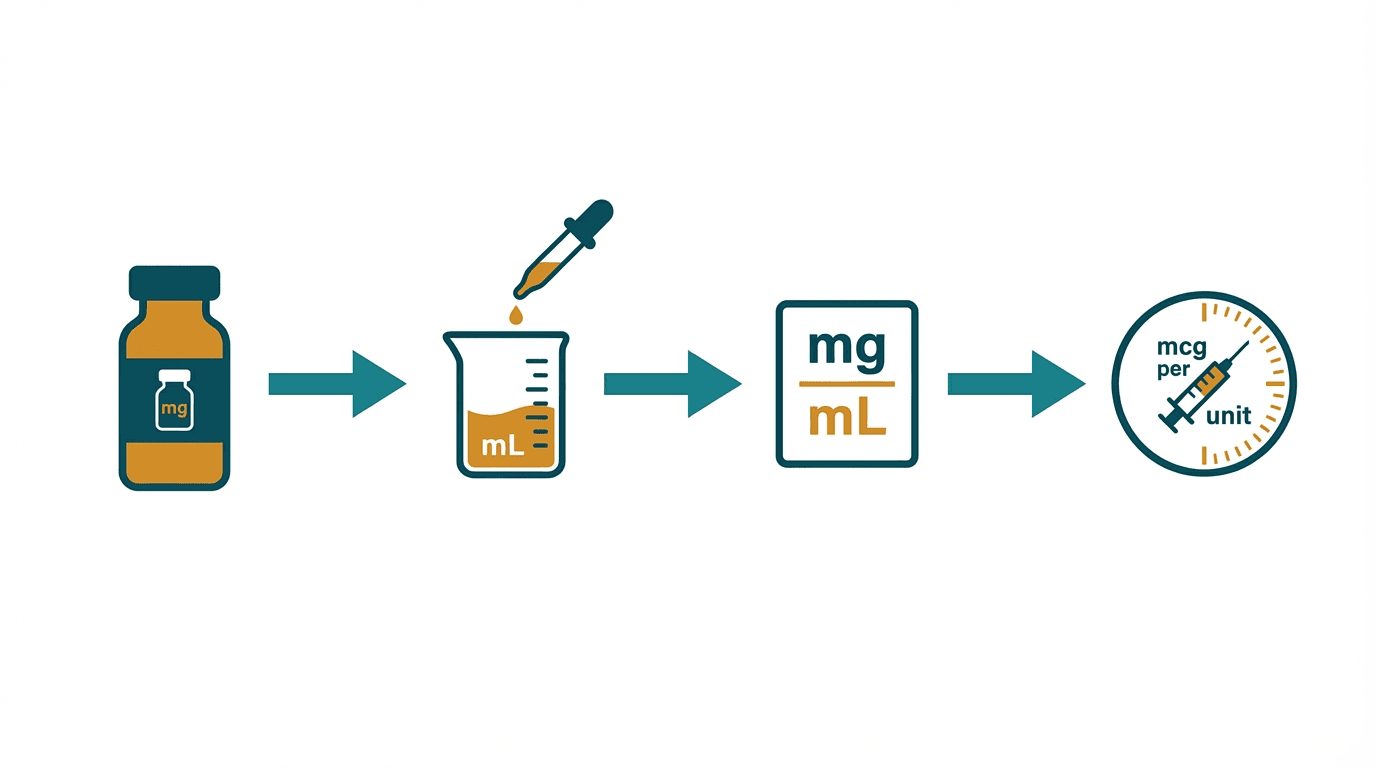
The calculator divides the total peptide (mg) by the total liquid volume (mL) to produce the concentration in mg/mL. It then derives mg per syringe unit and its inverse (units per mg) for your chosen syringe type. The worked example converts a sample dose through the full chain: mcg → mg → units → mL.
Assumptions & Limitations
- Assumes the peptide is fully dissolved and evenly distributed in solution after reconstitution.
- Total mL is the amount of diluent you added (bacteriostatic water, sterile water, etc.) — not including any vial overfill.
- Default syringe type is U-100 (100 units = 1 mL). Change this if you use a U-40 or U-50 syringe.
- Preset reconstitution volumes are common conventions — your actual volume may differ based on your protocol.
Explore next
- Reconstitution CalculatorCalculate exactly how many units to draw on your syringe. Enter your vial size, bacteriostatic water volume, and desired dose.
- Dosage CalculatorFind evidence-based dosing ranges for any peptide. Adjust for body weight, experience level, and administration route.
- Cost CalculatorEstimate peptide costs per dose, per week, per month, and per year. Enter your vial price and dosing schedule to plan your budget.
- Injection Volume CalculatorConvert any peptide dose to exact mL and syringe units. Enter your desired dose and concentration to see exactly how much to draw on a U-100 insulin syringe.
Frequently Asked Questions
How do I calculate peptide concentration?
What does "mcg per unit" mean?
What is a U-100 syringe?
Does adding more bacteriostatic water change the concentration?
Educational Use Only
This calculator is provided for educational and informational purposes. It is not medical advice. Always verify your reconstitution math independently and consult a healthcare provider for dosing guidance.
Last reviewed: February 2026