Best Peptides for Fat Loss & Body Recomposition (2026 Guide)
A comprehensive guide to the best peptides for targeted fat loss and body recomposition. Covers GLP-1 agonists, growth hormone fragments, NNMT inhibitors, and GH secretagogues with evidence ratings and fat-specific protocols.
Overview
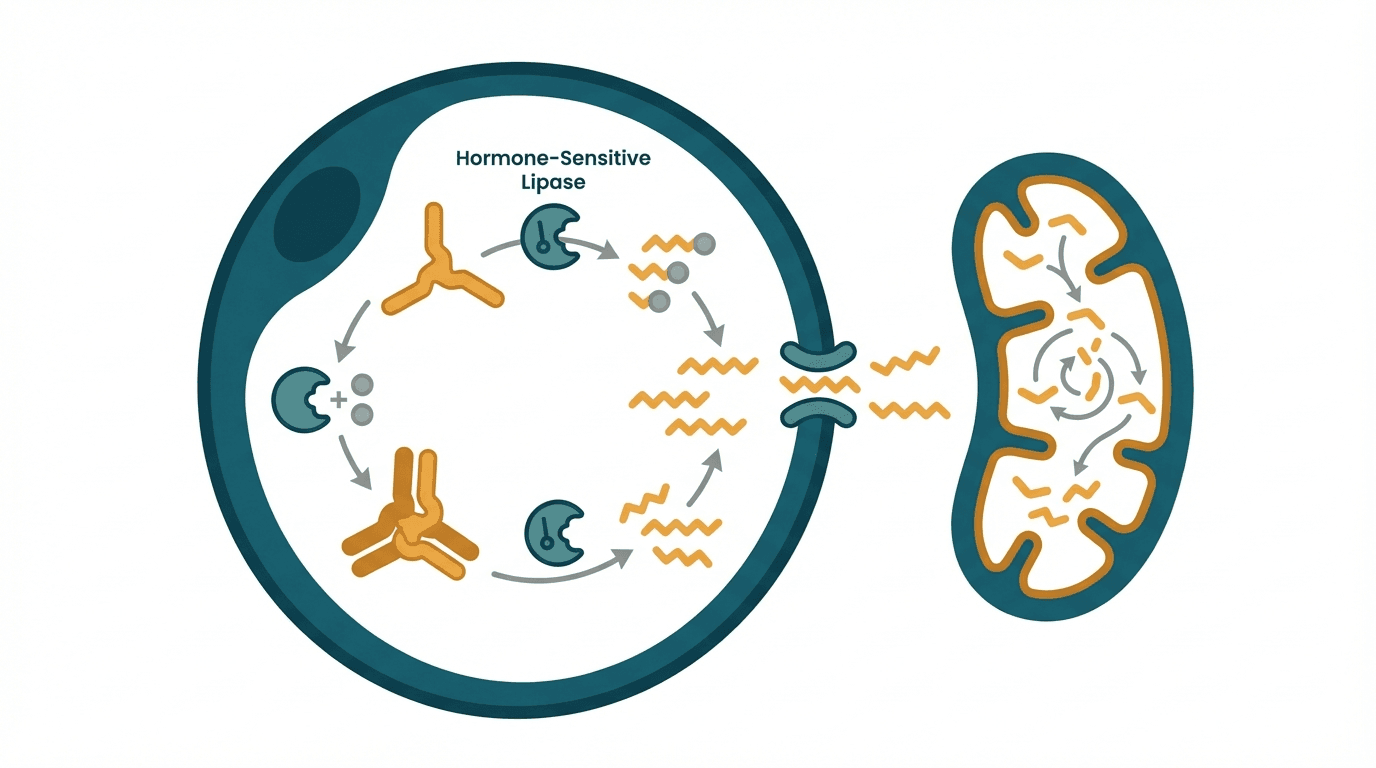
While weight loss peptides focus on total scale weight, fat loss peptides are selected and dosed specifically to reduce adipose tissue while preserving or building lean muscle mass — a process known as body recomposition. The distinction matters: GLP-1 agonists produce significant weight loss but 20–40% of that loss comes from lean mass, making them suboptimal as standalone recomposition tools. Peptides like tesamorelin and ipamorelin preferentially target visceral and subcutaneous fat through growth hormone pathways, while AOD-9604 and 5-Amino-1MQ act directly on fat cell metabolism without systemic hormonal effects. The most effective fat loss protocols often combine an appetite-suppressing GLP-1 peptide with a GH-pathway peptide to shift the ratio of fat loss to muscle loss.
Best Peptides for Fat Loss
Mechanism: Dual GIP/GLP-1 receptor agonist that reduces caloric intake through central appetite suppression while improving adipose tissue insulin sensitivity and lipid metabolism
Key benefit: SURMOUNT-1 data showed ~33% of weight lost was lean mass — better fat-to-lean loss ratio than semaglutide, making it superior for body recomposition
Mechanism: GLP-1 receptor agonist that reduces appetite and food intake while shifting energy substrate utilization toward fatty acid oxidation in insulin-sensitized tissues
Key benefit: Most extensively studied for fat mass reduction with dual-energy X-ray data showing significant preferential visceral fat reduction
Mechanism: C-terminal fragment of human growth hormone that activates the beta-3 adrenergic receptor on adipocytes, stimulating lipolysis and inhibiting de novo lipogenesis without triggering IGF-1 release
Key benefit: Pure fat-targeting action without the muscle growth, blood sugar, or IGF-1 effects of full-length GH — allows fat loss without systemic hormonal disruption
Mechanism: Selective NNMT inhibitor that blocks nicotinamide N-methyltransferase in white adipose tissue, reversing the metabolic reprogramming that makes fat cells resistant to lipolysis
Key benefit: Targets the newly discovered NNMT pathway that explains why some fat deposits are resistant to diet and exercise; oral bioavailability enables easy dosing
Mechanism: GHRH analogue that stimulates endogenous pulsatile GH release, activating GH-mediated lipolysis predominantly in visceral adipose depots while preserving lean mass
Key benefit: Only FDA-approved peptide specifically indicated for visceral fat reduction; clinical trials show 15–18% reduction in trunk fat with minimal lean mass change
Mechanism: Selective GHSP that triggers physiological GH pulses, enhancing lipolysis and fatty acid mobilization particularly during fasting and sleep states without cortisol or prolactin elevation
Key benefit: Clean GH elevation that enhances overnight fat burning; commonly stacked with CJC-1295 for sustained 24-hour lipolytic activity with minimal side effects
Quick Comparison
| Peptide | Efficacy | Key Benefit | Profile |
|---|---|---|---|
| Tirzepatide | high | SURMOUNT-1 data showed ~33% of weight lost was lean mass — better fat-to-lean loss ratio than semaglutide, making it superior for body recomposition | View → |
| Semaglutide | high | Most extensively studied for fat mass reduction with dual-energy X-ray data showing significant preferential visceral fat reduction | View → |
| AOD-9604 | moderate | Pure fat-targeting action without the muscle growth, blood sugar, or IGF-1 effects of full-length GH — allows fat loss without systemic hormonal disruption | View → |
| 5-Amino-1MQ | emerging | Targets the newly discovered NNMT pathway that explains why some fat deposits are resistant to diet and exercise; oral bioavailability enables easy dosing | View → |
| Tesamorelin | moderate | Only FDA-approved peptide specifically indicated for visceral fat reduction; clinical trials show 15–18% reduction in trunk fat with minimal lean mass change | View → |
| Ipamorelin | moderate | Clean GH elevation that enhances overnight fat burning; commonly stacked with CJC-1295 for sustained 24-hour lipolytic activity with minimal side effects | View → |
References
- Tesamorelin effects on trunk fat and visceral adipose tissue in HIV-infected patients with abdominal fat accumulation (2010) — PubMed
- Body composition changes with tirzepatide in the SURMOUNT clinical trial program (2023) — PubMed
- AOD9604: a novel lipolytic peptide with potential anti-obesity effects derived from the C-terminal portion of growth hormone (2001) — PubMed
Frequently Asked Questions
What is the difference between weight loss peptides and fat loss peptides?
Which peptide is best for stubborn belly fat?
Can you build muscle and lose fat at the same time with peptides?
How do fat loss peptides affect metabolism?
How long does it take to see fat loss results from peptides?
Explore next
- TirzepatideSURMOUNT-1 data showed ~33% of weight lost was lean mass — better fat-to-lean loss ratio than semaglutide, making it superior for body recomposition
- SemaglutideMost extensively studied for fat mass reduction with dual-energy X-ray data showing significant preferential visceral fat reduction
- AOD-9604Pure fat-targeting action without the muscle growth, blood sugar, or IGF-1 effects of full-length GH — allows fat loss without systemic hormonal disruption
- 5-Amino-1MQTargets the newly discovered NNMT pathway that explains why some fat deposits are resistant to diet and exercise; oral bioavailability enables easy dosing
- Tirzepatide dosage guideComplete tirzepatide dosage chart with titration schedule, dose escalation timeline, reconstitution instructions for compounded forms, and side effect management strategies. Educational reference based on published clinical trial data.
- Semaglutide dosage guideDetailed semaglutide dosage chart covering weight management titration (Wegovy), type 2 diabetes dosing (Ozempic), and oral semaglutide (Rybelsus). Includes compounded reconstitution instructions, side effect profiles, and cycle guidance based on published STEP trial data.
- AOD-9604 dosage guideEducational reference for AOD-9604 (hGH fragment 176-191) dosage protocols discussed in research literature. Covers subcutaneous injection and oral administration approaches for fat loss.
- Tesamorelin dosage guideEducational reference covering tesamorelin dosage protocols, reconstitution instructions, and administration guidelines as discussed in research literature.